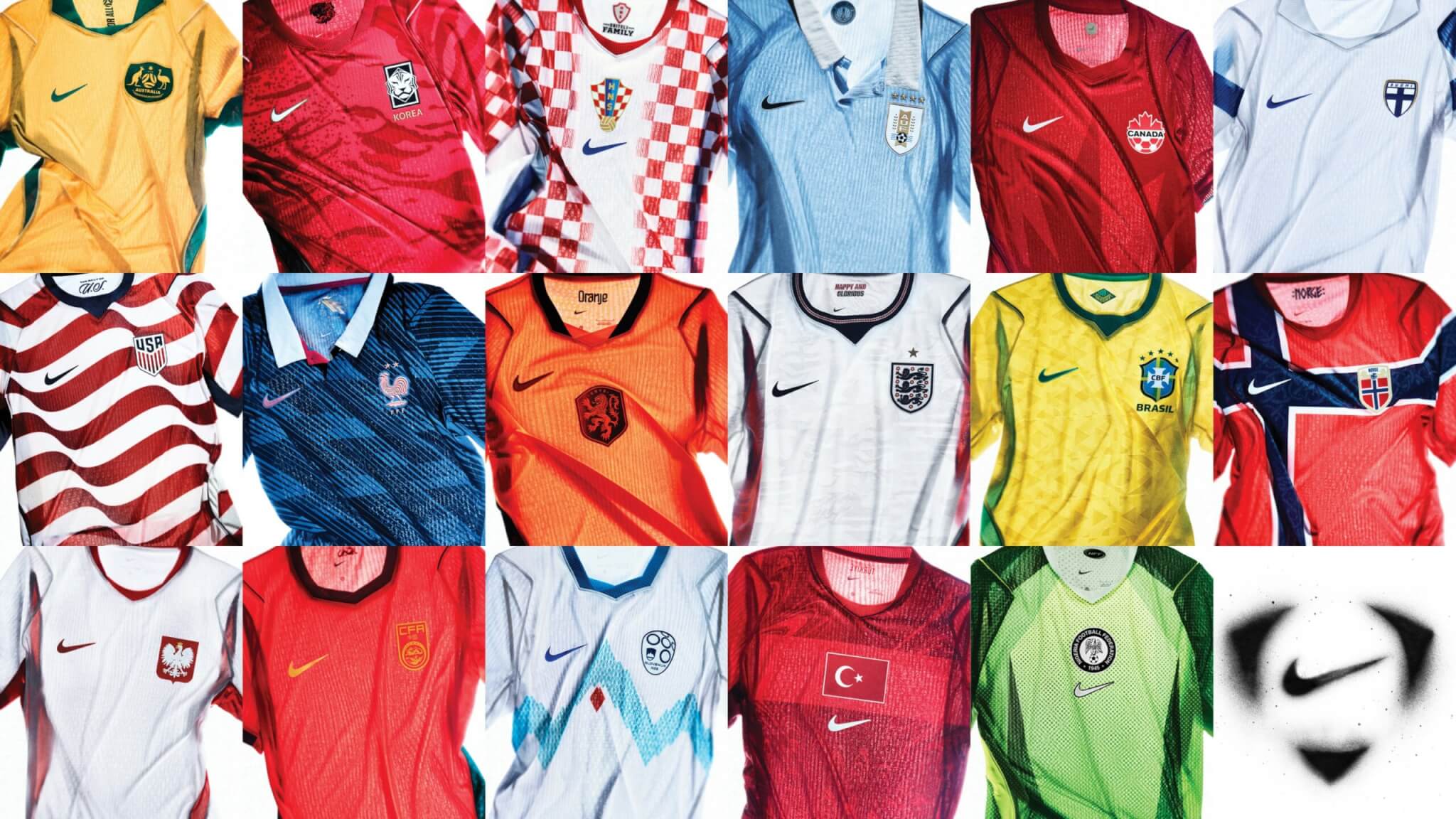
When you pull on a football shirt and look at the number on the back, you’re probably not thinking about type design. But someone spent months agonizing over every curve, cut, and counter in that numeral — and ahead of the 2026 FIFA World Cup, Nike has made that work impossible to ignore. The sportswear giant has designed completely custom typefaces for its biggest national team clients, and the results are a fascinating window into how typography can carry national identity on its sleeve. Literally.
Why Custom Kit Fonts Matter More Than You’d ThinkFor most of football’s modern era, kit numbers were fairly interchangeable. Slight variations existed, but the underlying philosophy was practical: make it legible from 100 metres away, make it printable on polyester, and move on. Nike is throwing that playbook out for 2026. The company is heavily prioritizing bespoke typography for its top-tier teams at this tournament, giving each federation a typeface that feels designed for them specifically — not just slapped on.
This matters beyond football. When a brand the size of Nike commits to custom type for a global event watched by billions, it signals that typography is no longer a finishing detail — it’s a core design decision, as intentional as the crest or the colorway. The variety of approaches across just five national teams reveals just how much a typeface can say before a single player even touches the ball.
USA: Collegiate Power With a Modern TwistThe United States kit marks a first for U.S. Soccer — for the first time ever, the federation has its own fully bespoke number and font system, dubbed the Stars and Stripes fonts. Nike leaned hard into American sporting heritage with this one. The numbers are thick and blocky, radiating that unmistakable collegiate American sports energy you’d recognize from an NFL stadium or a varsity gymnasium. It could easily feel dated — but Nike kept it sharp by incorporating dynamic, slanted inner cutouts that pull the design decisively into the present.
The result feels both nostalgic and ambitious — exactly what a host nation wants to project heading into its first World Cup as sole organizer. The font isn’t just decorating a shirt; it’s telling a story about a football country that respects its past and has big plans ahead.
Brazil: Angular Aggression, No ApologiesBrazil’s 2026 World Cup font takes a very different approach. Where the USA leans into heritage, Brazil goes forward — hard. The typeface is modern, sharp, and aggressive, built on geometric shapes and angular cuts that give the numbers a futuristic edge. There’s no nostalgia here. This is a design that wants to look like it belongs in 2026 and beyond.
For a nation that has historically dressed its teams in more classic, flowing aesthetics, the sharpness of this new typeface is a statement. It suggests a Brazil that’s hungry, that’s taken the aesthetic of intensity and made it structural. Every number looks ready to sprint.
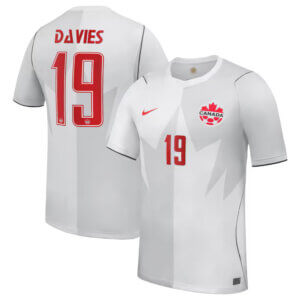
Canada: The Most Daring Design of the GroupIf Brazil is bold, Canada is brave. Nike’s designers gave the co-host nation arguably the most stylized font of the entire tournament. The defining move is a set of very distinct, sharp triangular cuts — most visible in the letter “A” — that directly echo the jagged silhouette of a maple leaf. The numbers themselves are tall and relatively thin, with a unique inner-stencil construction that makes them look almost architectural.
It’s a risky call. Highly stylized sports typography can easily tip into illegibility or novelty. But Nike threads the needle — the maple-leaf reference reads as design sophistication rather than literal symbolism, and the tall, lean proportions give the numbers a genuine elegance. For Canada, using this World Cup as a coming-out party on the global stage, it’s exactly the right statement.
England’s font goes in the opposite direction of Canada’s futurism. Nike reached back to the 1990s and early 2000s for inspiration, producing a blocky, angular typeface that will immediately trigger muscle memory for anyone who grew up watching football during that era. It’s traditional, deliberately so, and there’s genuine craft in how the retro aesthetic is handled without feeling like pastiche.
The real detail that elevates it is the inclusion of the Three Lions crest at the base of each numeral — complete with the single star honoring England’s 1966 World Cup win. It transforms numbers into mini monuments. On the home kit, rendered in red with navy outlines, the combination looks genuinely striking. England’s football identity has always been rooted in history, and this font acknowledges that without being trapped by it.
South Korea: Where Typography Meets CalligraphyThe most artistically considered font of the group belongs to South Korea. Nike’s designers drew directly from Seoye, traditional Korean brush calligraphy, to create a typeface with soft, flowing, gently curved lines and delicate stylized flicks at the midpoints and joints of each character. There’s a subtle inner line running through each numeral that adds dimensionality, making the numbers feel layered rather than flat.
In a landscape of angular, aggressive sports typography, South Korea’s font stands apart by being quietly beautiful. It’s a genuine piece of cross-cultural type design — taking a Western sporting convention and infusing it with an Eastern artistic tradition. The result sits on a football shirt but wouldn’t look out of place in a type design exhibition.
What This Tells Us About Typography in 2026Nike’s investment in bespoke kit typography for the 2026 World Cup reflects something the type design community has known for years: fonts communicate identity before a single word is read. Each of these typefaces tells you something about how a federation wants its team to be perceived — powerful, daring, nostalgic, or refined.
For designers, the takeaway is practical. Custom typography is no longer the exclusive territory of luxury brands and corporate rebrands. It’s showing up on football pitches, on stadium screens, on the backs of shirts worn by the most-watched athletes on earth. The bar for what “bespoke” typography can mean — and where it can live — keeps rising.
As billions of eyes tune into the 2026 World Cup this summer, most viewers won’t consciously register the fonts. But they’ll feel them. And that, really, is the highest compliment you can pay to a piece of type design.
Which national team’s custom font do you think is the strongest design? And are there other sports where you’d love to see this level of typographic ambition? Drop your thoughts below.

I'm a programmer at heart. But in my 20s, I realized there was more to the world of fonts than just Courier.
Driven by endless curiosity, I built a system to explore them.
That project grew into one of the world’s leading font identifier platforms: www.WhatFontIs.com.
By 2024, WhatFontIs is helping nearly one million designers—famous or not—discover the names of the fonts they need.